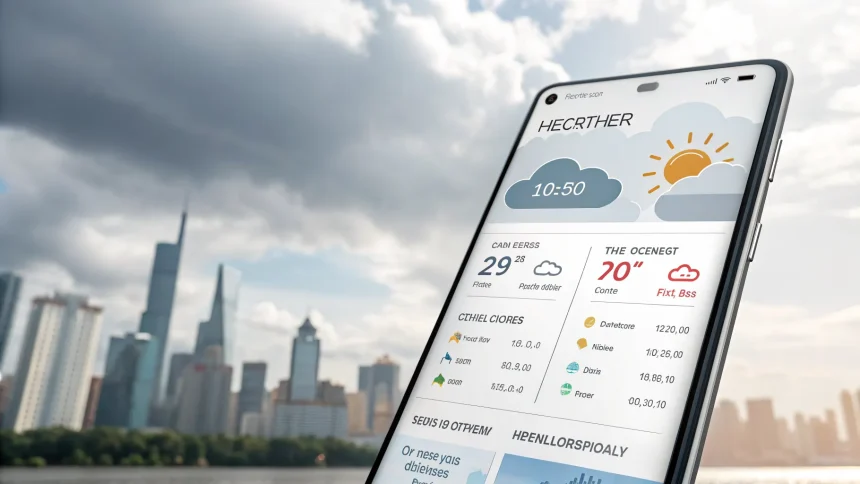
An upstart weather app is betting that showing uncertainty can boost accuracy—and trust—at a time when many users still expect a single, certain number for the day’s forecast.
Acme Weather says it will present odds, ranges, and confidence levels rather than a one-size-fits-all forecast. The plan arrives as users question why predicted rain, heat, or wind can shift hour to hour. The company argues that clearer odds help people plan better for work, travel, and safety.
“Acme Weather is the app that wants to embrace uncertain forecasts to make them more accurate.”
Why uncertainty is central to weather
Weather forecasts start with models that digest vast streams of data. Small differences in those inputs can lead to different outcomes. That is why forecasters use ensembles that produce a range of possible results.
For decades, experts have urged the public to use probabilities rather than single-point predictions. People tend to remember the headline number and forget the odds behind it. That gap can lead to frustration when the most likely outcome does not occur.
Acme Weather aims to close that gap. By showing users the spread of outcomes, it says it can prepare them for the next most likely scenario. That could mean packing an umbrella even if the dominant scenario is dry.
How the app could change daily planning
The company’s approach suggests a user interface built on clarity. Instead of “72 degrees,” users may see a range, like “68 to 75,” with a confidence score. Rain odds could show both chance and timing bands, not just a single percentage.
- Ranges for temperature rather than a single figure
- Probability of rain by time block
- Confidence labels that show how stable the forecast is
- Short notes on what could shift the outcome
Those features could help people make choices under risk. A coach might weigh a 40% chance of storms differently than a parent planning a park day. Clear odds empower different decisions without overpromising certainty.
The trust problem—and a possible fix
Public trust in forecasts often dips after high-profile misses. But not every change in outcome is a miss. It can reflect new data that shifts the odds.
Acme Weather’s pitch is simple: call uncertainty what it is, show it early, and update often. That framing could lower the sting of last-minute changes. It may also train users to think in terms of risk, not absolutes.
Critics warn that too much detail can confuse users. If confidence labels and ranges stack up, some might tune out. The app will need plain language and consistent visuals to avoid overload.
What experts want users to see
Meteorologists often stress three ideas for risk communication. First, the forecast is a probability, not a promise. Second, a range can be more honest than a single point. Third, people care about impact, not just conditions.
Applying those ideas means surfacing both odds and impacts. A coastal town may need wind risk bands more than temperature ranges. A commuter may need timing bands for rain more than storm totals. The app’s design will matter as much as its data.
Industry stakes and what to watch
Weather apps compete on speed, precision, and presentation. Many already use model ensembles behind the scenes. Few lead with uncertainty on the main screen.
If Acme Weather normalizes ranges and confidence, rivals could follow. That shift may extend to push alerts, which often oversimplify risk. More careful alerts could reduce alarm fatigue, yet still prompt action when needed.
Success will hinge on three tests. Do users understand the odds? Do they make better choices? And does the app stay clear when conditions shift fast?
Acme Weather’s promise rests on a clear idea: honest risk beats false certainty. If the app can show ranges and confidence without confusing people, it could change how forecasts guide daily life. The next phase will reveal whether clearer odds lead to better plans, safer choices, and steadier trust—rain or shine.