Nvidia chief executive Jensen Huang discussed the pace of artificial intelligence progress in a televised interview, signaling how fast the field is moving and where pressure points are forming. His comments arrive as chip demand soars, data centers expand, and companies weigh costs, talent, and safety.
The conversation centers on the who and the why: a dominant chip supplier, the companies training large models, and the investors trying to size the next phase. It also surfaces when and where change is most visible—inside cloud facilities, enterprise trials, and consumer apps that now rely on generative tools for daily tasks.
How fast is “fast” for AI?
Huang’s appearance reflects a simple idea appearing across the sector: speed now defines progress. Many firms are updating models on shorter cycles, with more parameters and larger datasets. Training runs that once took months can finish in weeks on modern accelerators. That pace rewards first movers but raises spending and energy use.
Enterprises are testing smaller, task‑specific models to get results with less compute. At the same time, top labs still push very large systems for broad reasoning and code. The result is two tracks moving at once: scale for state‑of‑the‑art benchmarks, and efficiency for real work.
Huang and industry peers have stressed that progress is uneven. Breakthroughs arrive in bursts, then teams climb a learning curve. Even so, the direction is clear enough that boards approve large multi‑year budgets for compute and data.
Chips, supply, and the data center buildout
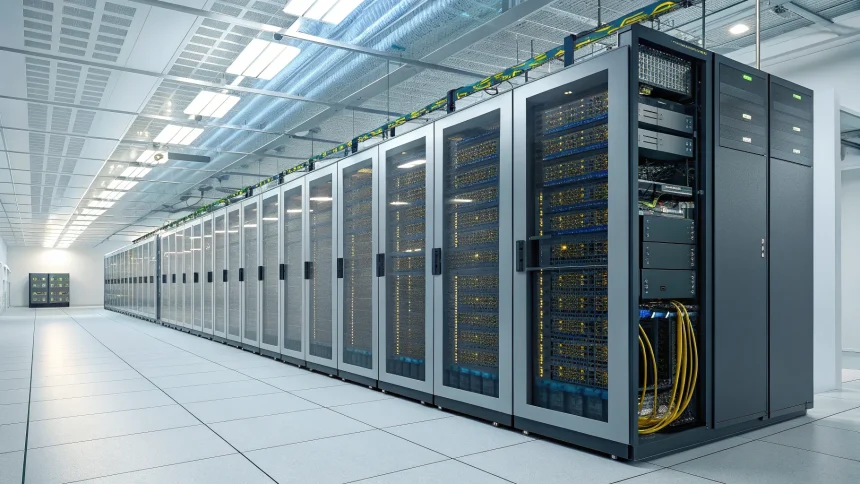
AI demand has made Nvidia the leading supplier of accelerators for training and inference. Cloud providers and large enterprises are locking in orders far ahead of delivery. Rival chips from AMD and custom silicon from big tech are rising, but the current backlog shows how tight the market remains.
- Capital spending by major clouds has shifted to AI‑heavy gear and networking.
- Power and cooling are now gating factors for many new sites.
- Lead times for high‑bandwidth memory and advanced packaging remain key risks.
Even small delays in any one step—memory, substrates, or networking—can ripple through shipment schedules. That is why customers are diversifying suppliers and testing software that can run across different chips.
Costs, access, and who benefits
For startups and smaller teams, access to compute is the main hurdle. Renting time in the cloud spreads costs, but sustained training still adds up. Many are turning to open‑source models and fine‑tuning on private data to cut bills and speed deployment.
Larger firms are building hybrid stacks. They keep sensitive work on private clusters and burst to the cloud when demand spikes. This approach can lower risk while keeping options open as architectures change.
Consumers see the effects in subscription prices, device upgrades, and faster features in search, office software, and customer support. The near‑term winners are firms that translate model gains into clear, repeat tasks that save money or boost sales.
Safety, policy, and the talent squeeze
As models grow, so does public concern. Lawmakers and regulators are weighing rules on transparency, data use, and security. Companies now publish safety notes, red‑team results, and usage limits, though methods vary.
Skilled workers are scarce. Engineers who can scale training, trim inference costs, and secure data flows are in high demand. Universities and online programs are racing to meet the need, but hiring remains tight, pushing salaries higher.
What to watch next
Near term, the focus stays on supply. If chip and memory output keeps pace, training schedules will hold. If not, firms may delay launches or shift to smaller models. Energy constraints could also slow buildouts in some regions.
Software will matter more. Better compilers, routing, and quantization can stretch each watt and dollar. Companies that cut inference costs without hurting accuracy will gain an edge.
Finally, measurement will improve. Clear benchmarks for quality, safety, and cost will guide buyers who must justify spending to their boards.
The takeaway is straightforward: this is a race to deliver useful results at a price people will pay. The hardware arms race is only part of the story. Execution—on data, safety, and deployment—will decide who thrives as AI moves from demos to daily work.
“A rapid shift in computing” captures the moment. The next phase will turn on supply stability, smarter software, and rules that build trust without choking progress.