

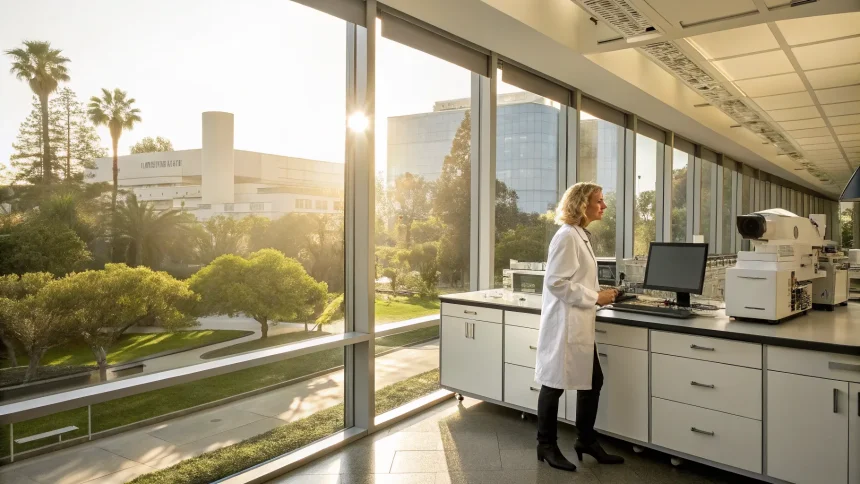
When researcher Christiane Schroeter finished her studies in the United States, she faced a choice that thousands of international graduates confront each year: return home or build a career where she trained. She chose California. Her decision shows how the state keeps skilled workers, and why that matters for science, business, and public policy.
Schroeter, who is from Germany, studied in the U.S. and decided to remain for work instead of moving back. She calls California a “Goldilocks place,” suggesting a mix of climate, opportunity, and quality of life that feels just right for her career and personal goals.
A snapshot of a larger trend
International students now number more than 1 million across American colleges and universities, according to long-running surveys by higher education groups. Many stay after graduation, especially those in science and engineering. Federal research has found that well over half of foreign Ph.D. recipients remain in the U.S. for at least five years, drawn by research labs, venture capital, and employer demand.
California often sits at the center of that pull. The state hosts major research universities, tech clusters, and strong healthcare systems. Those magnets help explain why graduates like Schroeter decide to build their lives there.
“California is like a ‘Goldilocks place.’”
That short line sums up a common view among international talent. The “just right” balance they cite includes year-round research funding cycles, a deep job market, and a lifestyle that makes long hours feel sustainable.
Why talent stays: push and pull factors
Graduates weigh career prospects, immigration hurdles, family ties, and the cost of living. For many, the advantages in California exceed the trade-offs. Employers sponsor work visas. Universities run industry partnerships. Local networks open doors that are harder to find elsewhere.
- Strong job pipelines from campuses into industry and government labs
- Access to STEM Optional Practical Training extensions for recent graduates
- Dense networks of mentors, peers, and investors
- Quality-of-life factors such as climate and cultural diversity
Germany, like many advanced economies, is also competing for these same graduates. Policymakers there have flagged shortages in engineering and healthcare. They have eased some immigration rules and promoted return programs. But the pull from U.S. research hubs remains powerful, especially in fields tied to biotech, data science, and clean energy.
Economic stakes for California—and elsewhere
Retention of international graduates feeds local innovation. Startups, patents, and clinical trials often emerge from teams that include foreign-born researchers. Cities that link universities with industry tend to see stronger job growth and wage gains in skilled sectors.
The flip side is a tight housing market and uneven access to childcare, which can push people away. Leaders in business and academia warn that talent wins are not guaranteed. The same factors that attract people can turn into barriers if costs rise too fast or visa pathways stall.
Policy and practice: what can help
Experts say a few steps make the biggest difference. Universities can expand career services for international students and strengthen employer ties. Companies can plan earlier for sponsorship and offer clear promotion tracks. Local governments can speed housing permits near job centers and transit.
Clearer visa rules would also help. The annual cap on high-skilled visas and backlogs for green cards create uncertainty, even for graduates with strong offers. Streamlined processing and predictable timelines would support planning for both workers and employers.
What Schroeter’s choice signals
Schroeter’s path mirrors a common pattern: train in the U.S., launch a career in California, and weigh long-term residence based on work, community, and family. Her “Goldilocks” phrase points to a practical balance rather than a perfect fit. It suggests that moderate costs and reliable support can be as important as big salaries.
Her story also highlights a quiet competition. Regions that pair world-class education with clear routes to employment tend to keep the talent they train. Those that do not often watch it leave.
As the new academic year approaches, the stakes are clear. California’s mix of research, industry, and quality of life will continue to draw graduates like Schroeter. The test is whether policy and planning can keep that balance “just right” in the years ahead. For employers and universities, the next step is simple: make it easier to build a life where people study and work.