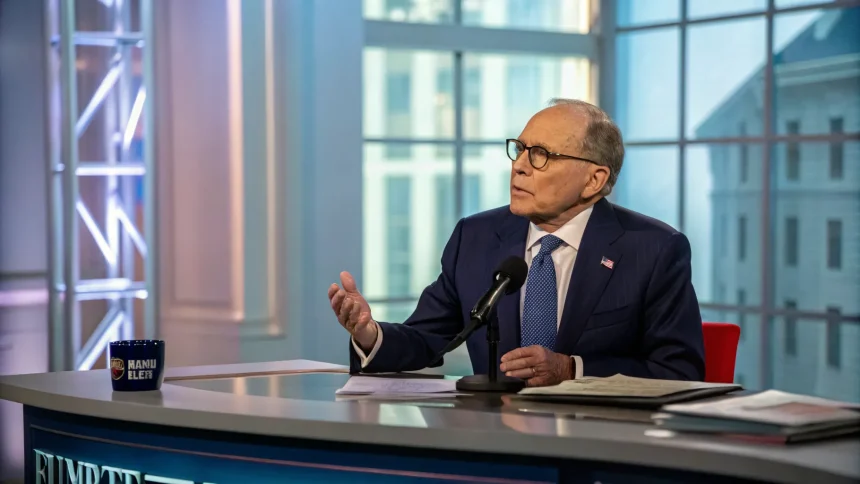
FOX Business host Larry Kudlow put the Trump administration’s economic record back in the spotlight, reviving a debate that still shapes how voters view growth, jobs, and prices. The discussion centers on how policy choices from 2017 to early 2021 affected workers, businesses, and financial markets, and which lessons carry weight for the next policy cycle.
Kudlow, who served as director of the National Economic Council under President Donald Trump, framed the conversation around the central question facing households and investors: Did lower taxes and deregulation deliver lasting gains, or did deficits, tariffs, and the pandemic shock blunt those benefits?
Setting the Stage: What the Numbers Show
By late 2019, the U.S. jobless rate had fallen to 3.5 percent, its lowest level in half a century. Wage gains were strongest for lower-wage workers, according to widely cited labor data, as a tight market drew in sidelined workers. Real GDP growth averaged roughly 2.5 percent from 2017 through 2019, lifted by business investment in 2018 after the Tax Cuts and Jobs Act (TCJA) slashed the corporate rate from 35 percent to 21 percent.
Inflation stayed moderate through 2019, while equity indexes climbed to repeated highs. Yet the federal deficit widened, reaching about $984 billion in fiscal year 2019, as lower tax revenues and higher spending outpaced growth.
Supporters’ Case: Growth, Jobs, and Investment
Backers of the Trump-era approach point to a trio of developments. First, a strong labor market pushing unemployment to multi-decade lows. Second, a regulatory pullback that they say improved business confidence. Third, a post-TCJA investment burst that, for a time, lifted capital spending and supported productivity.
- Unemployment at 3.5 percent in late 2019
- Corporate tax rate cut to 21 percent
- Stock indexes hitting record highs before 2020
They argue these gains mattered most for hourly workers, with wage growth improving at the lower end of the pay scale. They also say corporate tax relief positioned U.S. firms to compete for global investment and repatriate profits.
Critics’ View: Deficits, Trade Frictions, and Durability
Skeptics counter that the growth bump was brief and expensive. The deficit grew near $1 trillion before the pandemic, raising questions about fiscal room in a downturn. They also argue that trade frictions, especially tariffs on Chinese goods and retaliatory measures, hurt manufacturers and farm exporters, injecting uncertainty into supply chains and investment plans.
Critics add that pre-pandemic GDP did not break out of the 2–3 percent range seen in the prior expansion. They question whether the corporate tax cuts delivered lasting productivity gains, noting that business investment cooled in 2019 as trade tensions escalated.
The Pandemic Shock and Policy Response
The 2020 pandemic overwhelmed the late-cycle expansion. GDP contracted sharply, and payrolls fell by tens of millions in the spring before partial recovery began. The administration and Congress deployed large relief packages, including direct payments and enhanced unemployment aid, to bridge the collapse in demand and keep firms afloat.
Supporters say this rapid response helped prevent a deeper and longer jobs crisis. Detractors note that emergency spending, while necessary, compounded already rising deficits and set the stage for later inflation pressures as supply bottlenecks met robust demand.
What Endures: Policy Lessons and Open Questions
The record leaves a mixed but instructive picture. Tax and regulatory shifts can boost confidence and hiring, especially in the short run. Trade policy can redirect supply chains, but uncertainty can weigh on capital spending. Strong labor markets deliver broad wage gains, though sustaining them without price spikes is harder during shocks.
For households, the salient points are direct: steady jobs, rising pay, and stable prices. For businesses, clarity on taxes, trade rules, and permitting can guide multiyear investment plans. For policymakers, the unresolved issues are fiscal sustainability and the best tools to support growth without fueling inflation.
“The central test is whether policy delivers durable gains in jobs and incomes while keeping inflation in check.”
What to Watch Next
Future debates will center on the corporate tax rate, permitting reform, and the direction of tariff policy. Labor supply, immigration, and skills training will also shape how tight the job market can run without stoking prices. Markets will track whether business investment reaccelerates as uncertainty eases.
Kudlow’s focus on the Trump-era playbook ensures these arguments will remain part of the national conversation. The data suggest clear strengths before the pandemic and clear costs tied to deficits and trade fights. The test for the next policy chapter is combining strong employment and wage gains with a steadier fiscal path and more predictable trade settings.