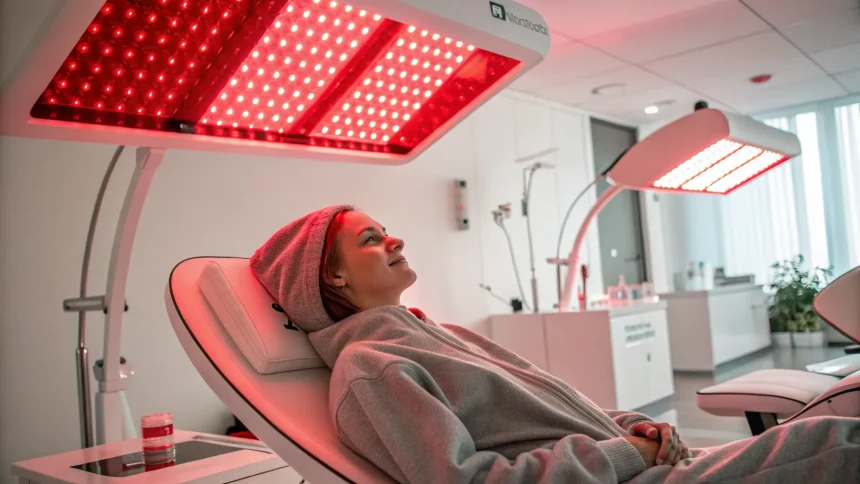
Interest in red light therapy is rising as consumers search for noninvasive ways to ease pain, improve skin, and recover faster from workouts. Clinics, gyms, and at-home devices are spreading across cities and online stores, creating fresh demand and fresh questions about how to use them safely. At the center is a simple message now echoed by providers and device makers: know the benefits, and know the limits.
“Learn more about the benefits of red light therapy and how to use it safely.”
What Red Light Therapy Is—and Is Not
Red light therapy, also called low-level light therapy, uses specific wavelengths of visible red and near-infrared light. Supporters say these wavelengths may aid cell activity and reduce inflammation. Sessions usually last a few minutes and do not break the skin. The treatment does not involve UV light and does not cause a tan.
Researchers have studied it for skin aging, acne, joint pain, muscle recovery, and hair thinning. Early findings suggest it may help some people with these issues, but results vary by device quality, dose, and the person’s health. It is not a cure-all, and it should not replace medical care for serious conditions.
Where Evidence Shows Promise
Peer-reviewed studies report short-term gains in skin texture and fine lines when sessions follow a set schedule. Some trials find reduced joint pain and stiffness in people with arthritis. Athletes use it as part of recovery plans, aiming to cut soreness after training. A few controlled studies suggest relief in neck and back pain for some users.
Doctors caution that many trials are small, and methods differ. Devices also vary in power and wavelength. That makes it hard to compare outcomes. Some devices are cleared by U.S. regulators for limited uses, such as temporary relief of minor aches and pain. Clearance does not apply to every claim made in advertising.
Safety First: How to Use It Wisely
Most home devices are designed for brief, frequent use. Following the manual matters. More is not always better. Overexposure can lead to skin redness or irritation. Eye safety is also key. While many panels are low heat, direct high-intensity light near the eyes may be risky without protection.
- Start with short sessions, often 5–10 minutes, a few times per week.
- Keep the device at the recommended distance to avoid hot spots.
- Use eye protection if the device is bright or used close to the face.
- Do not use on areas with open wounds unless a clinician approves.
- Pause use if you notice skin irritation and consult a professional.
People who take photosensitizing medications or have a history of skin cancer should talk with a clinician before trying it. Those who are pregnant should seek medical advice. Children should not use devices without medical guidance.
The Business Boom and Consumer Confusion
Studios now offer red light therapy as a stand-alone service or bundle it with cryotherapy and sauna sessions. Large gyms place panels near weight rooms. Portable panels have become common in online marketplaces. Price points range from under $100 to several thousand dollars.
This growth has created a flood of claims that can mislead buyers. Some products overstate results or blur the line between early-stage research and proven uses. Experts advise looking for clear labeling of wavelength, power output, and session guidelines. Warranty terms and return policies can also signal the maker’s confidence in the device.
What Clinicians Recommend
Many physical therapists and dermatology clinics now include red light therapy as an add-on, not a stand-alone fix. They tie it to broader plans that may include exercise, stretching, skincare, or medication. They stress tracking results week by week. If nothing changes after a trial period, patients should reassess and consider other options.
Insurance coverage is rare for cosmetic uses and limited for pain relief. Patients should ask about out-of-pocket costs and realistic timelines. A typical plan may run for several weeks with regular sessions before any effects are seen.
What to Watch Next
More head-to-head trials are underway to compare doses, wavelengths, and session schedules. Regulators continue to review new devices and marketing claims. Clinicians are testing how red light pairs with physical therapy and skincare routines.
For now, users can lower risk by following manufacturer instructions, protecting the eyes, and seeking medical advice when in doubt. Red light therapy may help some people feel and function better, but safe use and honest expectations remain essential.
The bottom line: treat it as a tool, not a cure. Check the evidence, use it safely, and track outcomes. As research grows, clearer answers on who benefits most—and how—should follow.