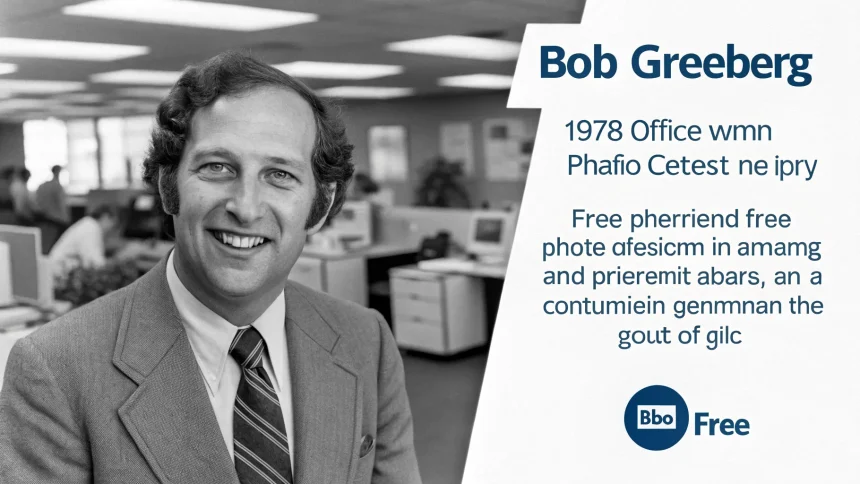
A now-storied 1978 office portrait owes its existence to an unlikely twist: an employee named Bob Greenberg won a free photo session from a radio contest. The moment, simple at the time, produced an image that colleagues later treated as a shared marker of identity. The story shows how chance can leave a lasting mark on workplace history, even decades later.
The core facts are straightforward. In 1978, one employee entered a radio giveaway and won a portrait. That employee, Bob Greenberg, turned the prize into a group photograph. The result became part of the workplace record. It has since been retold as an origin story for a widely circulated image from that year.
An Accidental Origin
The 1978 photo came about because one employee, Bob Greenberg, won a free portrait from a radio contest.
The account is brief, but it carries weight. Many companies produce official portraits through planned campaigns. This one began with happenstance. Colleagues gathered because the prize made it easy and free. The photograph captured a snapshot of time that might have been missed without the contest.
Greenberg’s decision shows how small choices can turn into shared milestones. A free portrait became an occasion. People dressed for it. They stood together. Years later, the image still speaks for that group and their moment in history.
Radio Promotions and Office Culture in the Late 1970s
Radio giveaways were common in the late 1970s. Stations often offered event tickets, small appliances, or photo sessions to keep listeners tuned in. Winning such prizes felt accessible and local. It was entertainment and community at once.
Offices at the time used photography mainly for internal newsletters, ID cards, or year-end reports. Professional portraits were not routine. Cost and logistics got in the way. A free session cut through those barriers. It offered a reason to schedule a shoot and gather staff in one place.
This is why the 1978 portrait stands out. It was not a corporate push or a branding plan. It was a one-off chance that turned into a record. The photo now holds value as documentation of people, roles, style, and mood.
From Snapshot to Shared Memory
Archival photos serve two purposes. They show who was there. They also tell how a workplace felt. A candid origin can make a picture more trusted by those who see it later. It looks less staged and more true to the era.
Images like the 1978 portrait are often used in presentations, retirements, and anniversaries. Viewers study faces and ask who did what. They notice haircuts, clothing, and posture. They read culture in the details. Over time, such photos support a company’s sense of continuity.
Because this photo grew from a simple prize, it also reveals something else. It shows initiative at the employee level. Greenberg did not only accept the award. He used it to create something the whole office could share.
Why Serendipity Matters
Chance events can shape what gets remembered. A free portrait turned into a group photograph that later carried historic value. That outcome was not planned. It emerged because one person acted on an opportunity.
Organizations can learn from this. Keep an eye on small wins that can bring people together. Treat them as sparks for documentation. Many important records begin as personal efforts, not official mandates.
- Small incentives can enable lasting records.
- Employee initiative often drives cultural moments.
- Unplanned images may feel more authentic over time.
Preserving and Interpreting the Image
The 1978 portrait works as a time capsule. It can anchor timelines and prompt stories from those who were there. It can also guide new employees. They see the people who built the place and sense what mattered then.
Preservation is key. Organizations should store original negatives or high-quality scans. They should log names, dates, and the story of how the photo came to be. In this case, the origin is clear and memorable: a radio contest win by Bob Greenberg.
That detail gives the image personality. It connects a formal portrait to a human moment. It also explains why the photo exists at all.
The latest retelling confirms the core point: one employee’s prize created a shared artifact that endures. The 1978 portrait was not planned by committee. It was sparked by chance and shaped by initiative. As workplaces sort their histories, this image shows how simple acts can carry forward. The next step is to preserve its context alongside the picture, so future viewers understand not just who appeared in the frame, but why the camera was there in the first place.