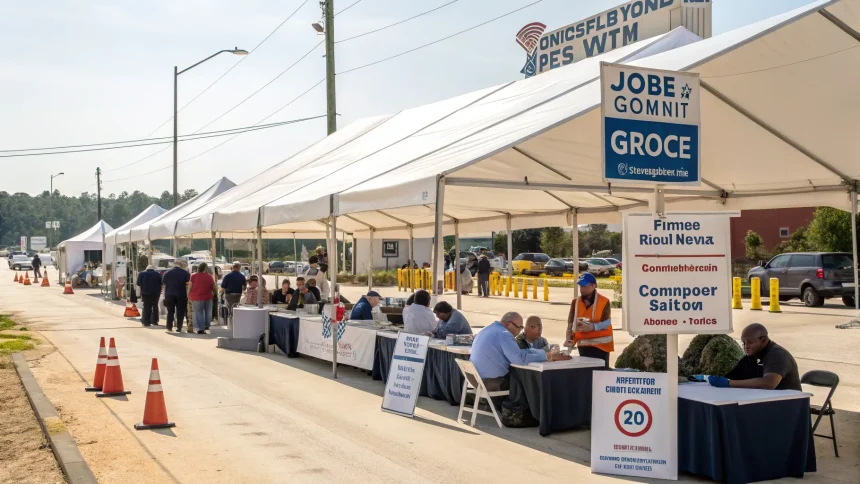
As federal immigration enforcement grows, a new hiring wave and proposed detention spending are reshaping the debate over how the system works and who benefits. Immigration and Customs Enforcement has accelerated recruitment while federal plans under the Trump administration considered billions for new detention warehouses that could shift local economies. In one rural Georgia town, some residents even asked for a facility nearby, seeing jobs and tax revenue.
The moves raise urgent questions about training, oversight, and cost. Communities face choices that weigh steady employment against social and legal concerns. The outcome could change law enforcement practices and the finances of small towns.
Hiring Surge Tests Training And Standards
ICE has grown staffing in recent years to keep pace with enforcement priorities. That growth has sparked a central question: can officer training scale as fast as hiring without lowering standards? The push to recruit quickly often compresses timelines and expands class sizes. That may create pressure on instructors and new officers alike.
“ICE is scaling up, with rapid new hiring.”
Law enforcement experts warn that cutting corners during training can lead to poor judgment in the field. That risk is higher when recruits have limited exposure to complex immigration law, mental health crises, or language barriers. Advocates call for added instruction on civil rights, use of force, and due process. Supporters of expansion argue that additional staff can reduce burnout, improve case management, and shorten detention times.
Billions For Detention Warehouses
The Trump administration’s plans contemplated major new spending on large-scale detention sites. The stated aim was to manage surges at the border and speed up removals. Such warehouses could centralize services, offer medical care on site, and cut transport costs. But the expense would be enormous and long term, locking in contracts that shape policy for years.
“Plans to pour billions of dollars into warehouses for mass immigrant detention centers, which can totally change the economy of some areas.”
Detention capacity changes the flow of cases through immigration courts. More beds can lead to more detentions, which may raise legal questions and costs for taxpayers. Civil liberties groups warn that large facilities can hide problems with medical care and accountability. Backers counter that new sites, if well run, could replace older, substandard jails.
Rural Towns See Promise And Risk
In parts of rural Georgia, local leaders view an ICE facility as a path to steady jobs, vendor contracts, and new tax receipts. Construction can bring short-term work. Operations can support corrections officers, nurses, drivers, and food suppliers. For small towns with few large employers, that appeal is strong.
“We hear from a rural town in Georgia that wants an ICE facility in its own backyard.”
But not everyone agrees. Opponents worry about the effect on families, school systems, and housing. Property values can swing, and the town’s identity can change. There is also the question of whether the jobs go to locals or specialized contractors from outside the county. Past cases show mixed results: some towns gained revenue, while others faced lawsuits and higher public safety costs.
- Job growth vs. long-term liabilities
- Tax revenue vs. litigation and oversight costs
- Public services demand vs. limited local capacity
What To Watch Next
Three factors will shape the outcome. First, the pace and quality of officer training will determine whether expansion improves standards or spreads them thin. Second, the cost and design of detention sites will affect both budgets and transparency. Third, local negotiations over incentives and contracts will decide who gains and who pays.
Advocates are pressing for stronger audits, independent medical reviews, and clear complaint processes. Town officials want firm job guarantees, local hiring plans, and exit clauses if conditions change. Any large deal will likely include performance metrics tied to compliance and community impact.
The debate is not just about numbers. It is about how a system handles people and how towns shape their future. For now, hiring is up, spending plans loom, and communities are weighing near-term gains against the long haul.
The next phase will reveal whether promised economic benefits match reality and whether training and oversight keep pace. Watch for contract details, facility locations, and public reporting on conditions inside. Those signals will show if this expansion leads to safer, fairer enforcement—or deeper costs that are harder to undo.