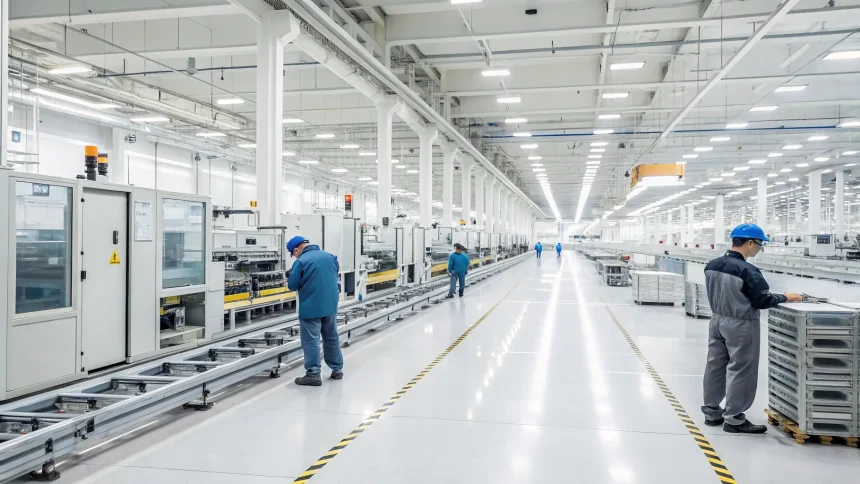
Alba said it has begun shutting three production lines, a step that touches nearly a fifth of its total output. The company reported the lines account for 19% of its 1.6 million tons a year in capacity. The reduction signals a meaningful shift for one of the sector’s steady producers and raises questions for buyers, suppliers, and workers.
The company, known as Alba, said it has initiated a shutdown of three production lines, which together represent 19% of its total output capacity of 1.6 million tons a year.
Why this matters now
Output cuts of this size can echo across supply chains. Aluminum is a key input for construction, packaging, autos, and electronics. When a producer trims capacity, buyers may face tighter supply, longer lead times, or shifting premiums. Suppliers that provide raw materials, power, and services to the lines may also feel the impact.
The company did not specify the timing for a restart or the reasons for the shutdown. In heavy industry, such moves can stem from maintenance, power constraints, market conditions, or environmental upgrades. Without detail, market participants will watch for signals on duration and scope.
Reading the numbers
The figures set clear boundaries for the scale of the step. Nineteen percent of 1.6 million tons translates to about 304,000 tons of annual capacity. The action does not mean output will drop by that full amount right away. The effect will depend on inventory levels, product mix, and whether other lines can raise utilization.
- Total stated capacity: 1.6 million tons per year.
- Lines affected: three.
- Share of capacity affected: 19% (about 304,000 tons annually).
For context, shifts of a few hundred thousand tons can change regional balances. Premiums and contract terms may adjust if buyers seek alternative supply. Spot markets tend to react first, with longer-term contracts slower to move.
Possible drivers and industry patterns
Producers often shut lines for planned maintenance, safety upgrades, or technology retrofits. Energy supply and cost can also shape decisions, since smelting is power intensive. When markets soften, companies may idle higher-cost lines to protect margins. When prices firm or conditions improve, they bring capacity back in stages.
Environmental compliance is another factor. Facilities sometimes pause lines to install controls or meet new standards. Such projects can be time-limited and followed by phased restarts.
Alba did not attribute the move to any specific cause. That leaves open several scenarios, ranging from short-term maintenance to a longer curtailment tied to market conditions.
Impact on customers, workers, and suppliers
Downstream customers may seek clarity on product availability and delivery schedules. If lead times extend, some buyers could diversify orders or shift to substitutes where possible. Others may draw down stock to bridge gaps.
For workers and contractors assigned to the three lines, the focus will be on job assignments, safety during the shutdown, and training if upgrades are planned. Suppliers of alumina, carbon materials, and logistics services may revise volumes and routes to match the new run rates.
If the shutdown is brief, the practical effects could be contained. A longer duration would have a larger footprint on contracts and planning cycles, especially into the next quarter.
What to watch next
Markets will look for more details on timing, maintenance scope, and any offsetting increases at other lines. Transparency on restart plans will guide how buyers set inventory targets. Any changes in regional premiums or transport bottlenecks will offer early clues.
Analysts also track power prices, freight conditions, and macro demand in construction and autos. These indicators often align with decisions on curtailments and restarts. If demand strengthens while capacity is offline, prices can rise. If demand cools, the effect may be modest.
Alba’s announcement marks a clear shift in operating status for part of its system. The headline number—19% of capacity—will anchor conversations in boardrooms and purchasing teams. Until the company provides more detail, buyers and suppliers may tighten planning, review contracts, and keep a close eye on inventories.