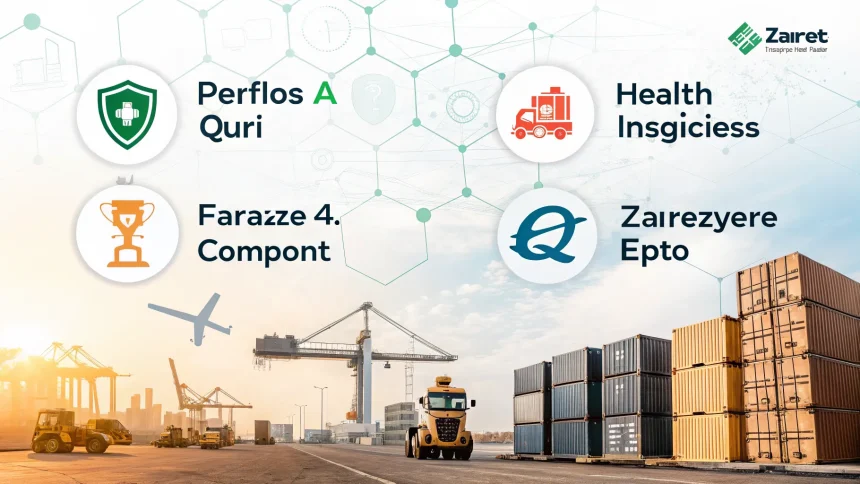
Artificial intelligence took center stage as the ET AI Innovation & Impacts Awards honored companies reshaping finance, health, logistics, defence, and e-commerce. In a showcase of applied technology rather than hype, Perfios, Qure.ai, FarEye, and Zepto were named among the winners. The event highlighted where AI is gaining ground and why it matters to consumers, businesses, and regulators right now.
Held against a backdrop of rapid deployment of AI in daily services, the awards put a spotlight on practical results. Organizers framed the program as a look at measurable change in core sectors that touch millions of users and jobs. The winners reflect a mix of enterprise platforms and tech-first consumer brands.
Awards spotlight AI across critical sectors
The program focused on AI that solves concrete problems. It recognized projects that cut costs, reduce risk, and improve speed and accuracy. The message was simple: real impact over promises.
“The ET AI Innovation & Impacts Awards spotlighted startups and enterprises transforming fintech, healthcare, logistics, defence and e-commerce through artificial intelligence.”
Perfios is known for financial data analysis tools used in lending and risk checks. Qure.ai builds medical imaging solutions that support faster diagnoses. FarEye develops software for delivery orchestration and shipment visibility. Zepto, a rapid commerce player, has leaned on data and AI to optimize demand forecasts and last-mile routes.
Why these wins matter for industry and users
The recognition points to a shift in how AI is judged: by outcomes felt on the ground. Winners operate in areas where seconds, accuracy, and trust are crucial. This is true in digital lending decisions, radiology reads, and on-time deliveries.
- Fintech: Faster, fairer credit decisions require clean data and explainable models.
- Healthcare: Imaging AI can help triage cases and support doctors, especially where specialists are scarce.
- Logistics: Route and capacity planning improves fulfillment and cuts fuel use.
- Defence: Decision support and monitoring tools can speed response while demanding strict safeguards.
- E-commerce: Forecasting and personalization improve stock accuracy and customer satisfaction.
Attendees emphasized that trust and adoption hinge on accuracy, speed, and compliance. Companies that tie models to clear service-level gains tend to scale faster. Those that explain model outputs to users and auditors reduce friction.
Inside the winning approaches
Perfios has focused on streamlining financial document analysis for lenders, aiming to reduce turnaround time while improving risk detection. That helps banks expand credit responsibly. Qure.ai’s tools read medical images to flag likely issues for clinicians, with the goal of earlier intervention and shorter wait times.
FarEye uses AI to predict delays and optimize delivery routes, which can cut missed slots and service costs. Zepto relies on demand signals and dynamic routing to meet tight delivery promises, a challenge in dense urban areas.
“Winners included Perfios, Qure.ai, FarEye and Zepto, highlighting applied AI where it counts most.”
Each example shows a path from model development to measurable service improvement. It also shows the need for guardrails in data quality, fairness checks, and human oversight.
Support, scrutiny, and what comes next
The awards arrive as boards and regulators ask for proof that AI is safe, fair, and useful. Industry leaders say the next phase will test governance, reliability, and integration with legacy systems. Vendors that can show audit trails and clear model behavior are likely to gain trust.
Experts at the event pointed to three hurdles to watch:
- Regulation: Clear rules on data consent, model risk, and audits.
- Talent: Hiring and retaining teams that mix data science with domain skill.
- Data quality: Cleaning inputs and reducing drift to keep models stable.
There is also growing focus on energy use, especially for training and inference at scale. Efficiency gains in model design and hardware can help lower costs and emissions.
The ceremony’s core idea was plain:
“AI’s tangible impact across growth sectors.”
That impact will be measured by faster care in clinics, fairer access to credit, more reliable deliveries, safer decisions in defence, and smoother online shopping. The winners offer early signals that these gains are achievable when teams align technology with real needs.
As more firms move from pilots to production, the bar will rise. Stakeholders will expect stronger benchmarks, consistent reporting, and user-friendly design. The next test is scale without loss of accuracy or trust. Watch for tighter rules, more cross-industry standards, and clearer metrics on time saved, errors reduced, and outcomes improved.