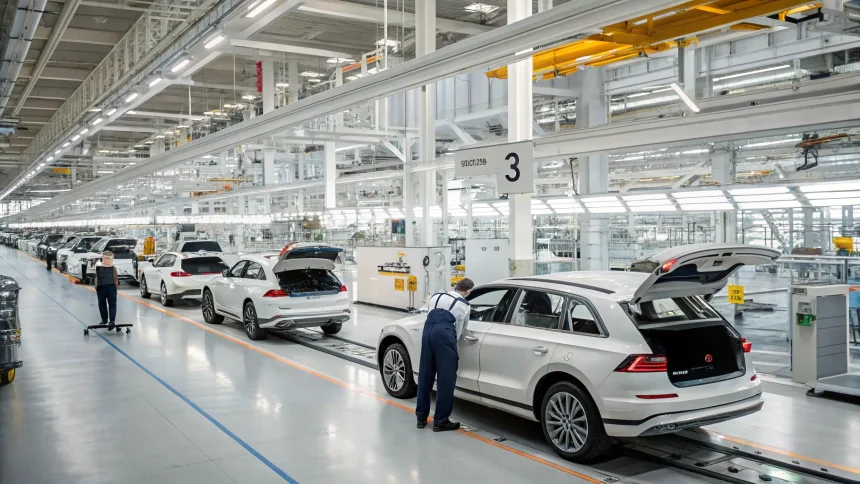
China’s top car exporter, Chery Automobile, has agreed to purchase Nissan Motor’s vehicle plant in South Africa, signaling a fresh shift in global auto production and competition. The deal points to growing Chinese influence in key markets, and raises questions about jobs, prices, and industrial policy in the region.
“Chery Automobile Co., China’s top car exporter, agreed to buy Nissan Motor Co.’s vehicle-manufacturing plant in South Africa, the latest evidence of the growing global dominance of Chinese brands.”
The move places a major Chinese brand at the heart of Africa’s most advanced auto hub. While deal terms and timelines were not disclosed, the agreement marks a strategic expansion for Chery and a retrenchment for Nissan in a market that has faced supply chain shocks and shifting consumer demand.
Why South Africa matters
South Africa is a regional anchor for auto assembly and parts production. It offers logistics links, supplier bases, and export frameworks that support right-hand-drive markets across Africa and beyond. Policymakers have used incentives to lure manufacturers and sustain local jobs, while also pressing for technology transfer and training.
Chinese automakers have increased exports sharply in recent years, finding buyers with competitive pricing and broad model lineups. Chery’s move fits a wider trend: building or acquiring capacity closer to customers to cut shipping times, manage currency risk, and qualify for local sourcing rules.
Strategic motives and industry impact
Analysts say the purchase could give Chery faster access to local assembly permits, trained labor, and established supplier networks. That could trim costs and help the brand scale popular SUVs and compact cars in a price-sensitive market.
- Local assembly can reduce import duties and logistics costs.
- Closer proximity to customers speeds product updates and after-sales support.
- Plant reuse avoids the expense and delay of greenfield construction.
For consumers, increased competition may pressure prices and expand model choices. If Chery ramps up quickly, it could push rivals—European, Japanese, Korean, and existing Chinese brands—to sharpen financing deals and service packages.
Jobs, suppliers, and local content
Workers and suppliers will watch how production plans evolve. A smooth handover could maintain headcount and keep parts makers busy. A change in model mix or output volumes, however, might require retraining or retooling. Labor groups will likely seek clarity on long-term commitments, while provincial and national officials will weigh the plant’s role in export targets and industrial policy goals.
Local content rules are another pressure point. Meeting higher thresholds can anchor more value in the country but demands investment in parts manufacturing and engineering support. Chery’s ability to localize key components—such as seats, wiring, or body parts—will shape the deal’s economic payoff.
Nissan’s recalibration
Nissan’s decision to sell signals a tightening focus on core platforms and regions. Global automakers are reassessing where they build vehicles as demand shifts, costs rise, and emission standards change. Selling the facility allows Nissan to redeploy capital, though it narrows its production footprint in a market where brand loyalty and dealer coverage remain important.
What to watch next
Key questions remain. Regulators will review the agreement and any conditions on jobs or local sourcing. Chery will need to detail intended production volumes, model plans, and timelines for restarting or expanding output. Suppliers will assess whether the product mix supports stable orders. Dealers will plan inventory and service training to match a new pipeline of vehicles.
The deal also arrives as countries refresh auto policies to support new technologies. If hybrid or battery-electric models enter the plan, infrastructure and cost incentives will matter. Clear signals on charging, parts standards, and after-sales networks could sway buyers and investors.
For now, the agreement highlights where the global car market is heading: more production near fast-growing customers, fiercer price competition, and a larger role for Chinese brands. If executed well, the transition could keep the plant active, expand choices for drivers, and reshape the regional supply chain. If not, delays and uncertainty could weigh on jobs and investment. Stakeholders will be watching for firm timelines, local content commitments, and a steady ramp in output.