

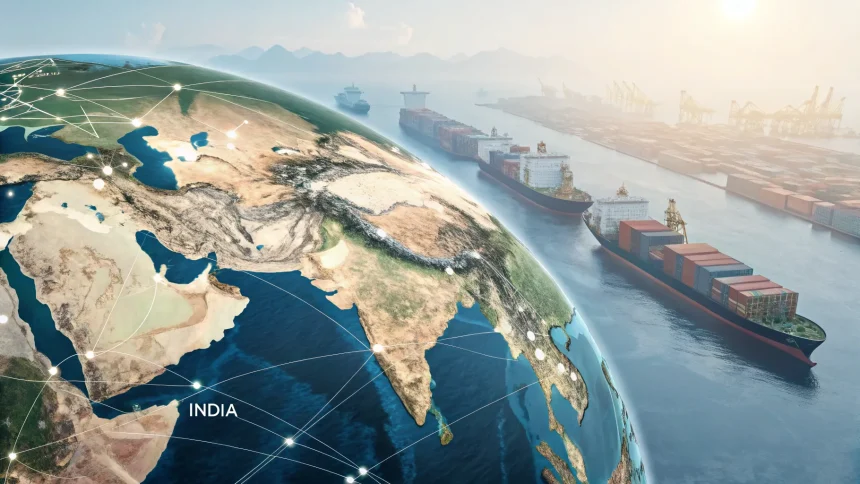
India is moving to conduct more than 60% of its trade on preferential terms after recent agreements with the European Union, the United States, and the Gulf Cooperation Council. The deals aim to link Indian industry more tightly with global value chains. Exports to these partners have grown 8.5%, outpacing overall export expansion, signaling early momentum.
Why the shift matters now
Preferential trade terms reduce tariffs or open select sectors under special rules. When a large share of a country’s trade flows through such agreements, firms can plan with better price and market certainty. India’s step suggests a push to anchor its manufacturers, service providers, and farmers in long-term cross-border production networks.
The timing is important. Many global buyers are spreading orders across multiple countries to reduce supply risks. Preferential access can help Indian suppliers win contracts where small tariff differences decide the outcome.
What the new agreements say
“India is set to conduct over 60% of its trade on preferential terms following recent agreements with the EU, US, and GCC.”
These deals aim to expand market access and ease movement of goods and services. Lower duties and clearer rules of origin can make Indian products more price competitive. Standards alignment could speed customs clearance and reduce delays.
“This strategic move aims to integrate India into global value chains, with exports to these partners showing a significant 8.5% growth, outpacing overall export expansion.”
An 8.5% rise to these partners points to early gains. It also hints that buyers in these markets are increasing orders for Indian inputs or finished goods.
Who stands to benefit
Large manufacturers can use preferential rules to scale exports in sectors such as automotive components, electronics assembly, textiles, chemicals, and processed foods. Service exporters may find smoother access for business and technical work tied to manufacturing supply chains.
Smaller firms could benefit from tariff cuts, but they will need help with documentation and compliance. Rules of origin can be complex. Missing a certificate or using the wrong input mix can void the preference and raise costs.
Risks and the fine print
Preferential access comes with conditions. Meeting partner standards on quality, safety, and sustainability will be essential. Firms may need to adjust sourcing to qualify for tariff benefits. That could mean shifting to local or partner-country inputs.
There is also the question of domestic competition. Lower duties can invite more imports. Policymakers will face pressure to balance export gains with support for sectors that feel squeezed.
What changes for businesses
- Map supply chains to meet rules of origin and avoid lost preferences.
- Align with partner standards on product safety, labeling, and sustainability.
- Invest in quality control and certification to speed customs clearance.
- Use trade finance tools to handle larger orders at tighter margins.
- Track tariff schedules and phase-ins to time market entries.
Signals from the export data
The outperformance of exports to the EU, US, and GCC suggests demand is firm in these markets. It also shows that even modest tariff relief can move orders. If this trend holds, local suppliers may scale faster and invest in capacity. Logistics providers could see higher volumes on lanes linked to these regions.
However, the spread between partner-market growth and overall exports bears watching. A widening gap would indicate growing reliance on a few partners. A stable gap would suggest broader competitiveness gains.
What to watch next
Implementation will decide the outcome. Customs modernization, digital documentation, and clear guidance on rules of origin will be key. Training for small and medium exporters could unlock more value from the agreements.
Investors will look for signals on infrastructure, from ports to cold chains. Buyers will watch delivery reliability. If firms meet these tests, value-chain integration can deepen, and the 8.5% export growth may be a floor, not a peak.
India has set a clear course: more trade on better terms with major partners. Early data points are positive. The next phase will test execution at the factory gate, the port, and the negotiating table. If businesses and officials align on standards, finance, and logistics, the new trade web could support steadier growth and stronger jobs. The world will watch whether today’s preferences turn into lasting market share.