

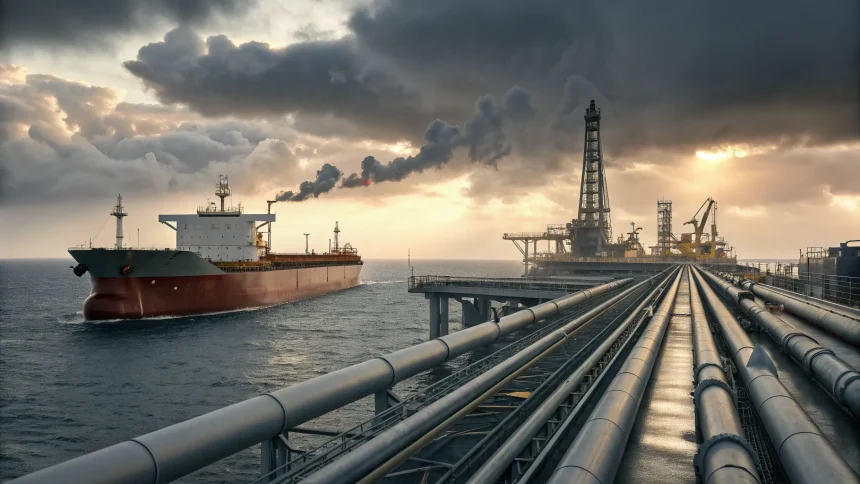
Amid fresh talk of tighter U.S. action on Venezuela’s oil sector, financial commentators are weighing the risks for energy markets and geopolitics. A panel on The Big Money Show examined President Donald Trump’s reported push to wield greater control over Venezuelan crude flows, asking what it could mean for prices, supply, and regional power dynamics.
The debate comes as U.S. policymakers reassess sanctions, licenses, and enforcement tied to Venezuela’s state oil company. Investors are watching for signals that could shift crude benchmarks, influence U.S. gasoline costs, and alter trade routes in the Americas.
“‘The Big Money Show’ panelists discuss President Donald Trump’s move to control Venezuelan oil, the geopolitical risks and what it means for US energy markets.”
Venezuela’s Oil Leverage and Past U.S. Actions
Venezuela holds some of the world’s largest proven oil reserves, but output has fallen sharply over the last decade. Sanctions, underinvestment, and infrastructure failures have cut production capacity and exports. During the previous Trump administration, Washington tightened sanctions on state oil company PDVSA and moved to restrict access to global finance. Control over CITGO, a key U.S.-based refining asset, also became a point of pressure.
Any new efforts to direct or restrict Venezuelan oil would likely echo those earlier tools: licensing limits for buyers, tighter shipping enforcement, or measures linked to debt and asset claims. Such steps ripple through the market, even if physical supply remains limited, because traders price in higher risk.
Market Impact: Prices, Supply, and Refining
The panel framed the stakes in simple terms: policy signals move markets. If Washington narrows legal paths for Venezuelan exports, fewer barrels may reach refiners in the U.S. Gulf Coast and beyond. That could add support to global benchmarks if buyers struggle to replace those volumes quickly.
U.S. refiners built to handle heavy sour crude often rely on a mix that includes Latin American grades. Reduced access to Venezuelan barrels could force shifts toward Canadian heavy or Middle Eastern supplies, sometimes at higher cost or longer shipping times. Those adjustments might lift crack spreads and, in time, retail fuel prices.
Some investors see limited near-term impact because Venezuela’s export capacity remains constrained. Others warn that even small disruptions can tighten a market where inventories are not abundant. The balance hinges on OPEC+ output decisions, U.S. shale growth, and demand in Asia.
Geopolitical Stakes: Caracas, Washington, and Moscow
Energy leverage has diplomatic consequences. A harder U.S. line could pressure Caracas while pushing it closer to partners like Russia or Iran. That alignment might help Venezuela find alternative financing or shipping, but often at a discount and with higher risk.
For Washington, firmer control over Venezuelan flows could support policy goals on governance and elections. Yet it also raises the chance of retaliation, smuggling, or legal battles over seized assets. Regional neighbors, including Colombia and Brazil, would monitor spillover effects on migration, trade, and security.
Investor View: Volatility and Hedging
Traders often respond to policy headlines before details are final. That can increase short-term volatility in crude and refined products. Companies with exposure to heavy crude, shipping, or Latin American logistics may review hedging and inventory strategies.
- Refiners may seek alternative heavy grades to keep utilization steady.
- Producers could benefit from higher prices if supply tightens.
- Shippers might face stricter compliance checks and insurance costs.
If the policy path proves softer than expected, risk premiums could fade. If it hardens, term contracts and cargo flows will adjust, possibly redrawing trade maps in the Gulf and Caribbean.
What Data Matters Next
Analysts will watch official license changes, enforcement actions on tankers and intermediaries, and export tracking from key Venezuelan ports. Market data on Gulf Coast imports, refinery runs, and crude differentials will reveal whether the policy has real teeth.
Signals from OPEC+ could either cushion or amplify the impact. A decision to add supply would blunt price gains. A steady or lower quota could tighten conditions further.
The panel’s discussion highlights that energy policy is never just about barrels. It touches inflation, voter sentiment on fuel costs, and U.S. relations with allies who buy Venezuelan crude. As one takeaway, the market will price the direction of travel as much as the destination.
For now, investors should brace for headlines and keep an eye on shipping logs, Gulf Coast cracks, and heavy-light spreads. The coming weeks will show whether this policy push reshapes flows or remains a warning shot. Either way, the signal is clear: oil and geopolitics are moving in tandem, and prices will follow the next policy step.