

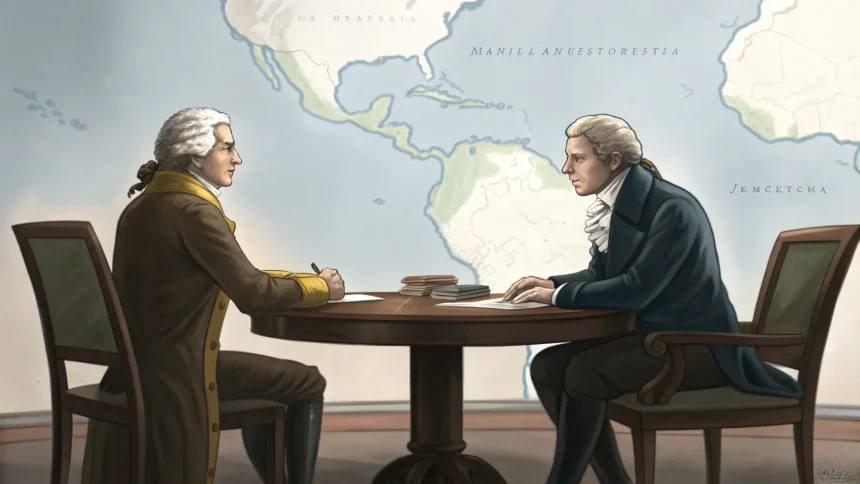
Two centuries after President James Monroe warned Europe to stay out of the Americas, the policy is back at the center of U.S. foreign policy arguments. With Venezuela as a flashpoint and Greenland in the discussion, the Trump era put fresh weight on a 19th-century idea and raised questions for allies and rivals.
The debate focuses on whether a U.S. claim to regional prerogatives should guide action now. It also asks how such a claim fits a world of global supply chains, rising China, and fragile democracies in Latin America.
From 1823 Warning to 21st-Century Policy
“203 years ago, President James Monroe declared the Western Hemisphere off limits to powerful countries in Europe.”
Monroe’s 1823 message told Europe to avoid further colonization in the Americas. The United States lacked the power to enforce it at first, but Britain informally backed the idea to protect trade.
Over time, Washington expanded the concept. The Roosevelt Corollary in 1904 justified interventions to stabilize debts and governments. During the Cold War, U.S. leaders cited it to counter Soviet influence, backing coups and proxy fights from Guatemala to Chile.
By the 1990s, many policymakers spoke of partnership instead of spheres of influence. Trade deals, elections, and regional blocs shifted the focus from hard power to rules and markets.
The Trump Reframing
“President Trump is reviving the Monroe Doctrine to justify intervening in places like Venezuela, and threatening further action in other parts of Latin America and Greenland.”
Senior officials in 2019 said the Monroe Doctrine was “alive and well,” tying it to pressure on Nicolás Maduro’s government in Venezuela. Sanctions and diplomatic isolation were paired with support for opposition leader Juan Guaidó. The message was that outside powers—especially Russia and Cuba—should step back.
Greenland entered the conversation when Trump expressed interest in purchasing the island from Denmark. That idea did not advance, but it showed how Arctic strategy, minerals, and military basing now intersect with older ideas about regional sway.
Supporters argue the approach deters rivals and protects U.S. interests close to home. Critics say it invites backlash, fuels nationalist narratives, and risks repeating past mistakes.
Regional Response and Risks
Latin American governments are split. Some backed pressure on Venezuela due to the humanitarian crisis and migration. Others rejected language that suggests a U.S. sphere of influence, recalling a history of interventions that toppled elected leaders.
The risk is policy overreach. Broad claims can frustrate partners who want cooperation on trade, climate, and public health. They also give space for China to build ties through financing and infrastructure, where conditionality is softer and projects move fast.
For Europe, a revived doctrine raises coordination challenges. European governments largely favored negotiations and humanitarian aid in Venezuela. Denmark dismissed the idea of selling Greenland. NATO politics, Arctic defense, and energy security add layers of tension and cooperation.
What the Shift Could Mean
Emphasizing a hemispheric claim signals a return to power politics. It tells rivals that U.S. red lines stand near its shores. It also pressures regional leaders to pick sides.
But global supply chains blur boundaries. Energy flows, lithium for batteries, and rare earths in the Arctic make local issues global. Any attempt to fence off the hemisphere collides with market realities and multilateral rules.
If the doctrine becomes a template, future disputes could spread from Venezuela to Cuba, Nicaragua, or the Caribbean. The Arctic, with melting sea lanes and new mining prospects, will stay on strategic agendas.
What to Watch
- Whether Washington links sanctions relief in Venezuela to concrete electoral reforms.
- How China adjusts loans and port investments across Latin America.
- Arctic policy shifts on minerals, climate, and U.S.-NATO basing in Greenland.
- Regional elections that may tilt foreign policy stances.
The revival of Monroe Doctrine language reflects more than nostalgia. It is a test of how far the United States will assert regional primacy and how partners will respond. The next phase will hinge on whether Washington pairs pressure with credible deals, and whether rivals see costs in challenging U.S. claims close to its shores.