

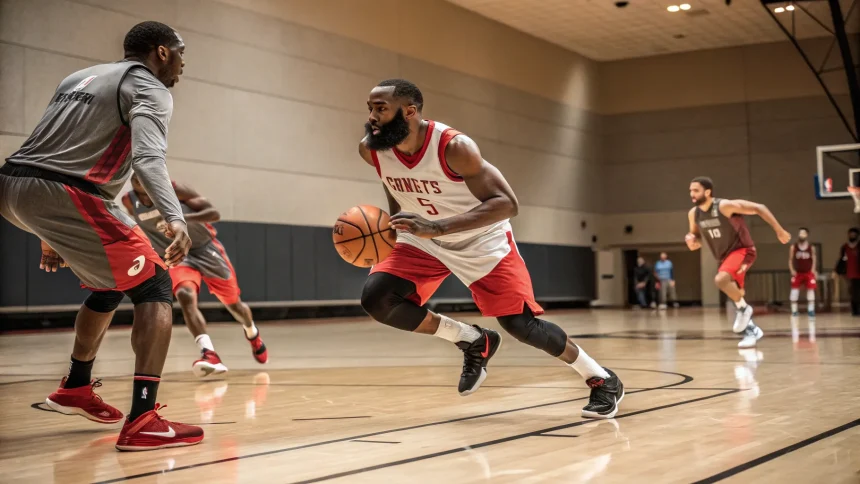
The Houston Rockets are setting a higher bar for the spring. The message is simple and public. They want a playoff run that lasts.
The Rockets hope to do more than just advance past the first round in the postseason.
The target reflects a move from rebuilding to competing. It signals belief in a young core, a tougher defense, and a clearer identity under head coach Ime Udoka. It also reflects a West that offers little margin for error.
From reset to results
Houston spent three seasons stockpiling picks and prospects after trading away veteran stars. Those years produced high draft choices and growing pains. They also set the stage for a turn.
Udoka’s first season brought structure and accountability. Veterans Fred VanVleet and Dillon Brooks added stability and edge. Center Alperen Sengun emerged as a focal point on offense. Guard Jalen Green flashed shot-making in key stretches.
Results followed. The team’s defense rose from the bottom tier to the top third of the league by efficiency. Turnovers fell. Half-court play improved. A late surge put pressure on rivals in the standings, even if the run came up short of a long spring.
What a deeper run would require
Winning four games in a series demands habits that hold under pressure. The Rockets will need repeatable strengths when the pace slows.
- Defense that travels: Contain drives, finish possessions, and avoid fouls.
- Half-court answers: Play through Sengun inside-out and punish doubles with quick reads.
- Reliable shooting: Corner threes from wings must fall to stretch the floor.
- Late-game poise: Better execution in one-possession endings.
- Depth minutes: Bench units must hold lines during star rest.
Playoff basketball often comes down to matchups. Opponents will test Houston’s weakest link on every trip. Switching, scram help, and rebounding from guards will be critical. So will avoiding empty trips caused by rushed isolations.
Voices, stakes, and pressure
The statement about goals mirrors what fans have wanted to hear. After years of patience, the city wants games that matter in May. The locker room tone has shifted as well. The focus now is on details that swing series, not only games.
VanVleet’s track record as a steady closer gives the group a template. Brooks brings physical defense against elite wings. Sengun’s touch and vision create high-value shots without chaos. Green’s bursts can flip momentum in minutes.
There is risk in raising expectations. A crowded West punishes slow starts and injuries. Young teams also learn hard lessons in crunch time. But setting a clear goal can sharpen preparation and define roles.
The West problem
The conference remains heavy at the top and stubborn in the middle. Many teams feature star duos and switchable size. That means the Rockets must win the math battles.
They will need to protect the arc and finish at the rim. Free throws matter in close games. So do second-chance points. Small gaps in these areas can decide a series before it turns.
What progress looks like
Progress is more than seeding. It is how the team scores in the half court against a set defense. It is how often they keep opponents under 110 points. It is how well they manage non-star minutes.
Internal growth can supply a lift. Green’s shot selection, Sengun’s conditioning and rim protection, and improved spacing from role players can add wins. Cleaner rotations and fewer fouls will help the defense hold steady in hostile arenas.
The goal is clear and public: win a series and aim higher. The path is also clear: guard, value possessions, and trust the system when pressure rises. If the defense stays sturdy and shooters hit their looks, Houston’s spring could last longer. Eyes will be on health, late-game execution, and how the young core responds when a series shifts on a single play.