

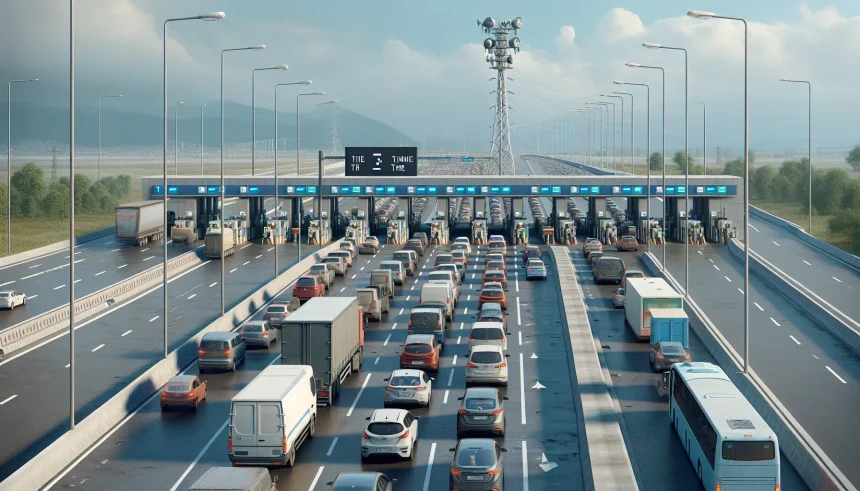
A call to waive toll fees when vehicles wait longer than five minutes at plazas has reignited a national debate on road user charges and service quality. The demand came from Aam Aadmi Party MP Raghav Chadha during a Rajya Sabha discussion, where he cited poor road conditions and questioned what drivers receive in return for the tax. Union Minister Nitin Gadkari responded that by 2026, tolls will be collected automatically through cameras, which he said would remove queues.
Public anger over queues and potholes
Toll roads promise faster travel, yet many drivers face slow-moving lines and patchy surfaces. Chadha’s proposal aims to link payment to service standards. His argument is simple: if a toll plaza cannot clear vehicles quickly, motorists should not be charged.
“Toll tax should be waived if the wait at toll plazas exceeds five minutes,” Chadha said, adding that poor road conditions weaken the case for charging drivers.
Motorists have long complained about delays at busy plazas during rush hours and holidays. Congestion wastes fuel and time. The five-minute threshold sets a clear benchmark that citizens can understand and measure on the ground.
Government’s answer: camera-based tolling by 2026
Nitin Gadkari told the upper house that the government plans to move to camera-based tolling by 2026. This approach would read number plates and deduct payments automatically, removing the need to stop at booths.
Gadkari assured that “toll payments will be deducted automatically via cameras by 2026,” a change he said will eliminate wait times.
India has already expanded electronic toll collection with radio tags, which cut cash handling and sped up lanes. Camera-based systems go further by removing barriers entirely. If implemented as described, traffic should flow at highway speeds through toll points.
What the five-minute waiver could change
Chadha’s idea raises practical questions for road operators and commuters. A time-based waiver could create clear accountability for toll agencies. If queues build up, drivers would pay less or nothing for that trip.
- It ties fees to on-the-ground performance.
- It could push operators to add lanes or improve staffing.
- It may reduce disputes if measurement is transparent.
However, enforcement will matter. Measuring wait times consistently, across varied traffic patterns and regions, is not trivial. Clear rules and reliable monitoring would be needed to avoid confusion at the plaza.
Road quality enters the toll debate
Chadha also pointed to poor road conditions as a reason to question tolls. That complaint resonates with many drivers who expect smoother journeys on tolled stretches. If a road is riddled with potholes or unfinished works, the public is less willing to pay full fare.
Linking tolls to maintenance could shift incentives. Contracts that reward steady upkeep and penalize lapses might improve ride quality. This could be paired with published service standards so users know what to expect.
The stakes for commuters and operators
For commuters, the prospect of camera-based tolling offers a clear upside: no stopping and fewer jams. For operators and the government, it promises steadier traffic flow and better fee collection. But rollout will require investment in technology, signage, and enforcement of number plates that cameras can read.
Transition periods often bring confusion. Public information campaigns and clear grievance channels can help. If a five-minute rule is considered, authorities would need a transparent way to track delays and grant waivers without slowing traffic further.
What to watch next
The next two years will be critical. Key steps include pilot projects, published timelines, and rules that explain how camera tolling will work day to day. Lawmakers may also press for performance-linked tolls, whether through time-based waivers or service guarantees.
Chadha’s demand gives voice to motorists who feel they pay more but get less. Gadkari’s pledge sets a deadline for relief from queues. If both ideas converge—better roads, faster passage, and fairer charges—drivers could see real change on the highway.
The debate now moves from the chamber to the road. The measure of success will be simple: shorter waits, smoother rides, and a system that charges only when it delivers.