On Wednesday, Australia begins what officials describe as a world-first social media ban, setting off debate from city classrooms to remote sheep stations. The policy arrives as students, parents, and teachers weigh how to keep kids safe online while staying connected in daily life.
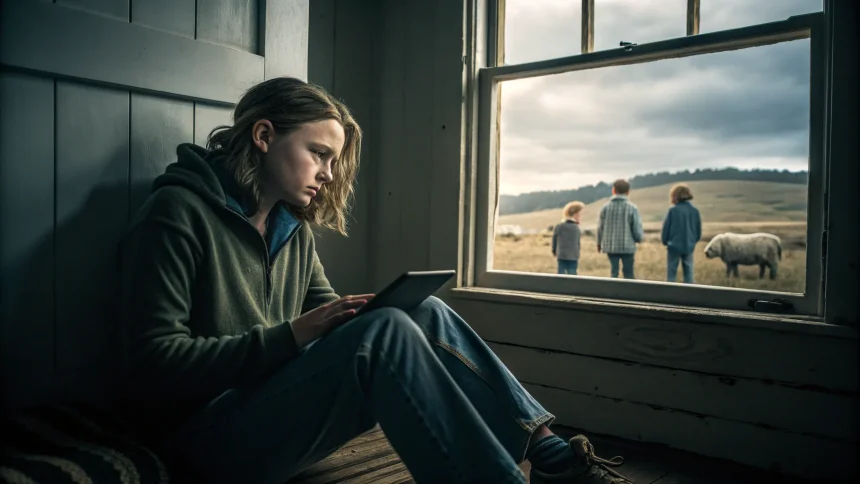
One 15-year-old, Riley Allen, lives on an Outback sheep ranch near Melbourne. He worries about losing touch with friends spread across long distances. His concern captures the larger question now facing families across the country.
“[He] doesn’t know how he’ll keep in touch with his circle of far-flung friends once Australia’s world-first social media ban takes effect on Wednesday.”
A remote teen at the center of a national test
Allen’s home sits far from town. That distance makes online tools more than just entertainment. For many rural students, social media is a lifeline for friendship, study groups, and sports teams.
Parents in remote areas often depend on group chats to coordinate transport, homework, and health updates. With fewer neighbors and longer drives, a blocked app can feel like a closed door.
What the policy tries to do
Officials have said the goal is to reduce exposure to harmful content and high screen time among young people. Supporters argue it could curb bullying, reduce pressure to constantly scroll, and improve sleep and school focus.
Education leaders also see a chance to reset habits. Some schools plan to lean on email, learning portals, and supervised messaging for class work.
Concerns from rural families and teachers
Rural families worry about isolation. They say connection gaps are not just social. They involve school support and mental health, too.
- Distance makes in-person meetups rare.
- Teams and clubs use social apps to organize.
- Emergency updates sometimes move fastest through group chats.
Teachers say the rule will only work if families have clear alternatives. Without a plan, students may shift to unsupervised tools that are harder to monitor.
Enforcement and the risk of workarounds
Any age-based block comes with enforcement challenges. Children can borrow a parent’s device or use anonymous accounts. Tech-savvy teens may also try virtual private networks or web versions of apps.
Experts warn that gaps in enforcement can push activity into less visible corners of the internet. That may make it harder for adults to offer help when problems arise.
Possible paths to stay connected
Communities are already testing options. Families report plans to move group chats to school portals or moderated platforms. Coaches are considering text lists and team apps that allow adult oversight.
For teens like Allen, a mix of tools may be needed. Video calls, moderated forums, and regular check-ins can replace some of what is lost. Rural groups also urge better internet access so safe tools work reliably.
What to watch in the early weeks
The first phase may shape whether the policy gains public support. Schools will track attendance, bullying reports, and student engagement. Parents will see if homework and team schedules flow smoothly.
Officials may adjust timelines or enforcement after feedback from families, youth workers, and schools. The experience of rural students will be a key test of fairness and practicality.
Australia now becomes a case study for the world. The headline is simple: protect kids. The details are hard, especially for those who live far apart. As one teen’s worry shows, connection matters. The next few months will show which fixes help, which do not, and what changes might be needed to keep young people both safe and included.