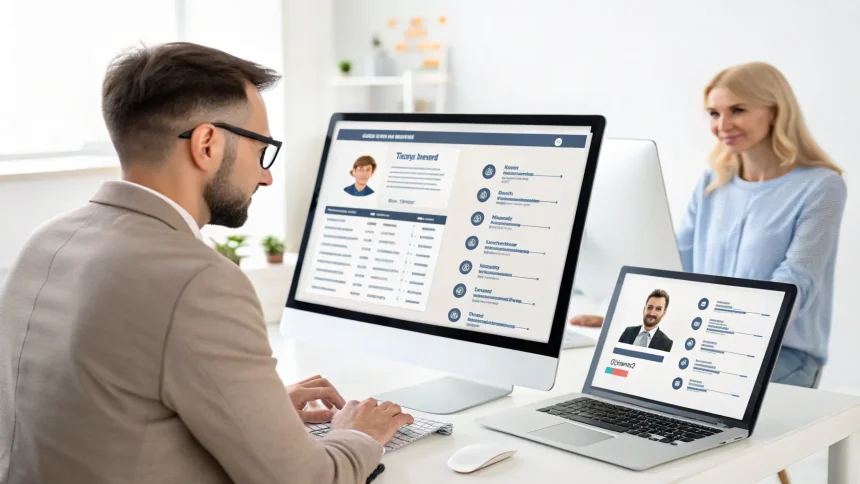
Artificial intelligence now sits on both sides of the hiring table, speeding up applications and sharpening screening tools at the same time. The shift is widespread, affecting how people look for work and how companies select candidates. It is changing the pace, fairness, and cost of hiring in a tight labor market.
Applicants report sending dozens, even hundreds, of AI-assisted submissions in a week. Employers respond with automated screeners to handle the surge. The result is more volume, but also more rejection, often without human contact. The trend is raising questions about access, bias, and the real meaning of “fit.”
“AI helps jobseekers apply for hundreds of roles, meanwhile employers use AI to filter them.”
An arms race in speed and scale
AI writing tools draft resumes, cover letters, and follow-up notes in minutes. Browser plug-ins can tailor phrasing to a job post and match keywords from the description. Some candidates use bots to autofill applications on career sites. The promise is simple: more shots on goal in less time.
Employers face a flood of submissions. Most large firms already use applicant tracking systems to rank resumes. New AI layers scan for skills, screen for certifications, and flag gaps. Some tools analyze writing tone or video interviews. Hiring teams say the tools help them manage volume and cut time-to-hire.
But speed has trade-offs. More applies do not always mean more interviews. The process can feel like a stand-off: automation meets automation, and human review grows scarce.
Quality, bias, and the myth of the perfect match
Recruiters say keyword stuffing is common. AI-written cover letters often sound alike. Screening tools can overfit to narrow signals in a job post. That can filter out promising people with nontraditional paths.
Researchers and regulators have warned that untested models can reproduce bias hidden in past hiring data. Some states require notices when AI is used in hiring and mandate audits for bias. Legal experts urge teams to monitor outcomes, explain decisions, and give candidates a way to request human review.
For jobseekers, the fix is not more volume, but better signaling. Clear evidence of skills—projects, portfolios, code samples, or brief work tests—can cut through automated gates.
Small businesses and the hidden cost of automation
Smaller employers often lack dedicated HR staff. They turn to low-cost AI tools to triage resumes. This can save time, but it can also block creative hires who do not “fit” the template. Local firms say they fear missing out on talent that larger companies overlook.
For small teams, a simple hiring workflow can help: define must-have skills, use structured screening questions, and keep one short skills task. That reduces bias and keeps applicants engaged.
What is working right now
Hiring teams and candidates are developing new habits to cope with automation. Several practices are proving effective:
- For candidates: show measurable results and link to proof of work.
- For employers: test real skills with short, paid tasks.
- For both: use clear, plain job descriptions that map skills to outcomes.
Recruiters also recommend limiting AI-written content to drafts. Human edits add voice and relevance. On the employer side, regular spot checks of screened-out resumes can catch false negatives.
The next wave: skills data and transparency rules
Skills-based hiring is gaining ground. More postings now list required capabilities rather than only degrees or years of experience. This approach fits AI tools that parse skill tags and match them to work samples and credentials.
Policy is catching up. Regions are moving to require notice when automated decision tools are used and to provide candidates with information on their status. Vendors now market explainable models and bias testing as standard features. If transparency rules spread, both sides may see fairer outcomes and fewer ghosted applications.
Still, the core tension remains. Automation increases reach but can hide talent. Human judgment is slower but can spot unusual promise. The best results seem to come from a blend of both.
Hiring will keep moving fast. Candidates who show proof of skills and tailor fewer, stronger applications are more likely to land interviews. Employers who test what matters, audit their tools, and keep a human in the loop will make better hires. Watch for new rules on transparency and bias audits, and for tools that verify skills rather than only scan for keywords. The goal is simple: more signal, less noise.