

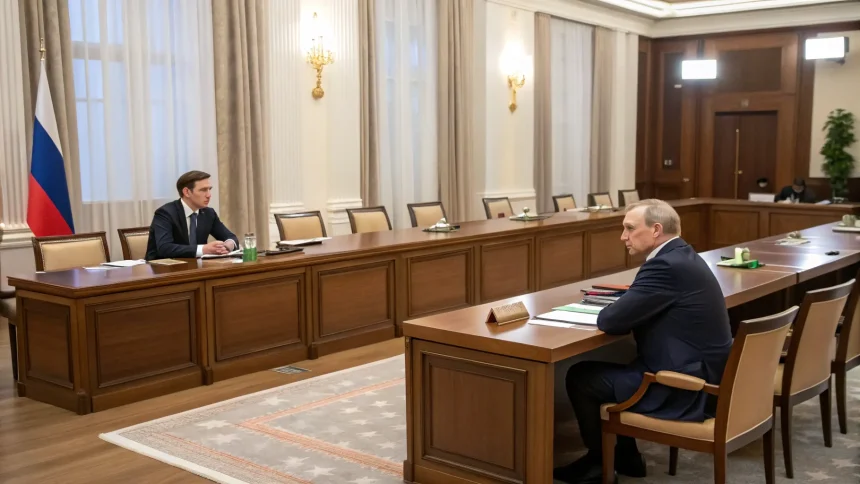
A high-profile visit to Moscow by US envoy Steve Witkoff and advisor Jared Kushner ended without progress, closing a five-hour meeting with Vladimir Putin that yielded no path to end the war in Ukraine.
The talks took place at the Kremlin on December 2. Kremlin aide Yuri Ushakov said the session produced no movement on core issues, especially territory. Putin rejected European proposals and warned of a response if Russia is provoked.
The US delegation left without a deal. There is no plan for a follow-up summit between Putin and US leadership. Hopes for a breakthrough faded as the conflict grinds on.
Stalled talks at the Kremlin
Officials described a long, direct exchange that did not narrow differences on territory or security guarantees. Ushakov gave a blunt assessment of the outcome.
“No compromise was reached — especially over territorial issues — and negotiations remain stalled.”
Putin pushed back on ideas circulating in Europe. He framed those proposals as unacceptable to Moscow and signaled a hard line.
European proposals are “unacceptable,” and Russia “would respond if provoked.”
Neither side announced fresh confidence-building steps. The meeting ended without a joint statement or timeline for next moves.
Background: A war with hardened positions
Russia launched its full-scale invasion of Ukraine in February 2022. Early talks in Istanbul faltered as fighting expanded and trust eroded. Since then, both sides have linked talks to battlefield momentum.
Territorial control is the central obstacle. Kyiv insists on restoring its borders and accountability for wartime damage. Moscow asserts claims over areas it now occupies and has moved to formalize control.
European governments have floated security and reconstruction frameworks. These ideas depend on a cease-fire and a political deal that remains out of reach.
What each side is seeking
The Moscow meeting highlighted familiar gaps:
- Territory: Ukraine seeks full sovereignty. Russia wants recognition of its current control.
- Security: Kyiv wants firm guarantees. Moscow wants limits on Western military support near its borders.
- Sanctions: Russia seeks relief. Western capitals tie relief to verified withdrawal and compliance.
Witkoff and Kushner did not speak publicly, but the framing from the Kremlin suggests Washington tested ideas on de-escalation and humanitarian relief. Without movement on territory, those steps stalled.
European plans and Russian warnings
Putin’s remarks signal resistance to proposals circulating among European leaders. Those ideas include sequencing a cease-fire, prisoner exchanges, and monitored corridors for grain and energy flows.
By labeling the plans unacceptable, Moscow is setting terms that may slow any broader package. The warning that Russia would respond if provoked points to risks of miscalculation.
Ushakov’s message suggested Moscow does not see urgency in changing course. That stance complicates European diplomacy and aid planning for Ukraine as winter strains energy and logistics.
Backchannels and political optics
The presence of Kushner, a former White House advisor, and Witkoff, a real estate developer acting as an envoy, signals the use of unconventional channels. Such efforts can open doors, but they often lack formal leverage.
Analysts say backchannels can test concepts quietly, yet they rarely settle core disputes without formal sign-off. The absence of a future summit plan suggests Washington and Moscow remain far apart.
Implications for Ukraine and allies
For Kyiv, stalled talks mean continued reliance on military aid and domestic mobilization. For Europe, Putin’s stance raises pressure to align policies on sanctions, energy, and defense spending.
Financial and humanitarian costs are rising. Reconstruction plans remain contingent on security conditions that are not improving.
What to watch next
Several markers will signal whether diplomacy can resume:
- Any shift in battlefield lines that alters bargaining power.
- New European proposals that address Moscow’s stated objections.
- Prisoner exchanges or humanitarian corridors as interim steps.
- Signals from Washington on formal talks at a higher level.
The Moscow meeting closed without a deal or a date. That clarity is its own message. Positions are set, and neither side appears ready to trade territory for peace.
For now, the war continues. The next opening may come from events on the ground, not conference tables. Absent a change in conditions, diplomacy will remain on hold.