

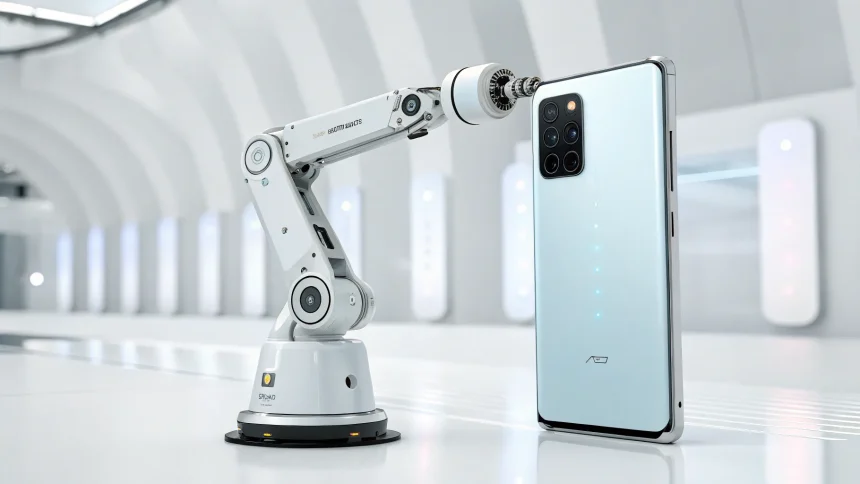
Honor has signaled a new push into artificial intelligence on mobile devices, saying it will share more about an “AI-powered robot phone” next year. The comment hints at a device that could change how users interact with phones, though details remain scarce for now.
The Chinese smartphone maker offered a brief update without naming features, pricing, or a release window. The timing suggests the company is preparing a reveal in 2025, as rivals increase their own AI features across high-end models.
“[Honor] would release more details about the artificial intelligence-powered robot phone next year,” the company said.
Why this matters now
Honor has gained ground since it separated from Huawei in 2020. It has pushed into Europe and other Asian markets with midrange and premium phones. Adding a device billed as a “robot phone” points to more ambitious hardware and software plans.
Smartphone makers are racing to add on-device AI for voice, camera, translation, and personalization. Samsung has shipped features like live translation and text tools. Google and Apple have promoted smarter assistants that run partly on the device to improve privacy and speed.
By using the term “robot phone,” Honor appears to be signaling something more than standard AI features. It could point to autonomous actions, context-aware help, or accessories that allow movement and sensing. But without specifications, those possibilities remain tentative.
What Honor did—and did not—say
The company set expectations with a single statement and no technical claims. That leaves open key questions about the hardware, including battery size, processor choice, and camera or sensor systems that might enable new behaviors.
Honor’s use of “AI-powered” also raises the question of how much computing will happen on the device versus in the cloud. On-device processing can help protect personal data and reduce latency. Cloud services can support heavier tasks but increase network dependence and privacy risks.
Analysts see promise and problems
Industry analysts say the idea could appeal to users if it meaningfully reduces steps in daily tasks. That might include proactive scheduling, smarter photo capture, or context-aware help that anticipates needs. But past attempts to reimagine the phone—like modular designs or foldables—show that new categories need clear value to win buyers.
Pricing will be central. Premium AI hardware often raises costs through advanced chips and memory. Battery life is another concern, especially if the device runs continuous AI models, camera sensing, or accessories.
Regulators and consumers will also ask how the device handles data. Clear controls, on-device processing, and transparent privacy policies could determine adoption in Europe and other markets with strict rules.
How a “robot phone” might differ
Honor’s wording suggests a device that can act more like an assistant than a tool. That could mean hands-free operation, context cues from sensors, or physical add-ons that enable movement or gestures. Similar ideas have surfaced in concept devices and companion wearables, but few have succeeded at scale.
To stand out, Honor would need to show repeatable use cases that work across apps and services. It would also need to integrate AI features with battery-saving design, strong security, and reliable performance in poor network conditions.
- Key hurdles: privacy, battery drain, heat, and price.
- Key tests: on-device model speed, accuracy, and stability.
- Key signals: developer tools, partner apps, and regional launch plans.
What to watch next year
If Honor unveils the device in 2025, it will likely position it against flagship phones with AI features. Success could depend on whether the “robot” label translates into everyday utility rather than a marketing term.
Buyers will look for clear demos, independent reviews, and long-term software support. Carriers and retail partners will look at return rates and user satisfaction before committing to wide promotion.
For now, the statement serves as an early marker in the AI phone race. The company has put a bold name on its plans. The next step is to show how that name delivers in real life.
Honor’s brief tease sets a high bar. The company must turn a catchy concept into reliable features that save time, protect privacy, and run all day. If it can do that, the “robot phone” could find a place in the market. If not, it risks joining a long list of ideas that never made it past the hype.