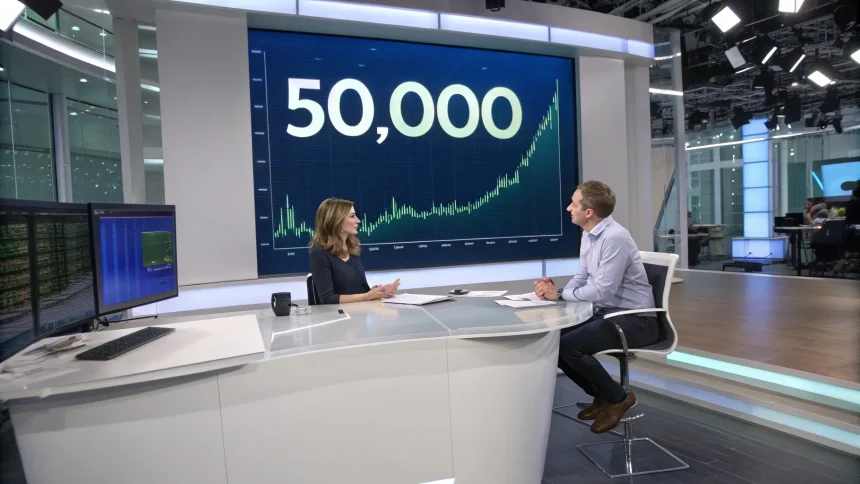
The Dow Jones Industrial Average touching 50,000 set a new marker for U.S. stocks as investors weighed strong earnings, sticky inflation, and rate expectations. On a morning broadcast, 248 Ventures Chief Investment Strategist Lindsey Bell and Claro Advisors founder Ryan Belanger assessed what the milestone means, how Japan’s Nikkei rally fits into the global picture, and why volatility may not stay quiet for long.
The discussion came as traders digested higher-for-longer interest rate talk from central banks and rising enthusiasm for technology and industrial shares. It also followed a powerful run in Japan, where the Nikkei breached levels last seen decades ago, aided by corporate reforms and a weak yen.
Why round numbers still matter
Market veterans often say price levels are just numbers, but the Dow crossing 50,000 can affect behavior. Bell and Belanger noted that large milestones can draw fresh attention to equities, shift sentiment, and prompt profit-taking from investors who anchored to earlier targets.
Such levels also influence headlines and fund flows. Even if they do not change fundamentals, they can nudge timing. That matters when positioning around rate decisions, earnings seasons, or geopolitical headlines.
What is powering the move
Several forces helped the Dow climb. Industrial and energy shares benefited from steady demand and tight supply chains. Financials gained from firmer margins with policy rates elevated. Technology strength continued, led by demand for cloud services and chips tied to artificial intelligence buildouts.
- Earnings have broadly surprised to the upside across large-cap sectors.
- Cash on the sidelines has trickled into equity funds as money market yields stabilize.
- Buybacks and dividends supported total returns, especially among blue chips.
At the same time, breadth has been uneven at points, a feature the guests flagged as a watch item. When a handful of mega-caps lead, pullbacks can feel sharper. A healthier tape tends to see more sectors participate.
Japan’s surge and global echoes
Japan’s Nikkei rally carried it past levels last seen in the late 1980s. Corporate governance changes, improved shareholder returns, and a weaker yen helped exporters. The move has drawn fresh foreign inflows and revived interest in Tokyo listings.
For U.S. investors, that raises two questions. First, does Japan’s reform push have staying power? Second, will currency swings erode dollar-based returns? Belanger pointed to the role of hedging and the need to separate company fundamentals from currency noise. Bell highlighted how stronger profitability trends at Japan’s firms, if sustained, could support earnings even if FX tailwinds fade.
Volatility: calm before a turn?
Volatility has stayed contained during the climb, but both guests warned against complacency. Inflation has cooled from its peak yet remains sensitive to energy and wage data. Central banks are signaling patience on rate cuts, a stance that can keep real yields firm and valuations in check.
Earnings season surprises and guidance changes are likely to be the next catalysts. If margins hold despite input costs, the case for equities strengthens. If not, high-multiple areas may face a reset. Geopolitical risks, from trade frictions to shipping routes, also hang over supply chains.
“Round numbers can pull in new buyers and trigger sellers at the same time. That mix often raises day-to-day swings.”
What investors can do now
The speakers stressed balance over bold bets. Diversification across sectors and regions helps manage single-theme risk. Quality—steady cash flows, strong balance sheets, and pricing power—remains a focus when rates stay elevated.
They also highlighted tools that respond to changing conditions. Laddered cash and bond holdings can capture yields while maintaining flexibility. Dollar-cost averaging reduces timing stress near milestones. For international allocations, investors can review currency exposure and consider partial hedges.
For those watching signals, keep an eye on:
- Forward earnings revisions and margin commentary.
- Rate-cut timing in policy statements and meeting minutes.
- Credit spreads for early signs of economic strain.
- Participation across sectors, not just mega-cap leaders.
The bottom line: The Dow at 50,000 reflects better earnings and steady demand, but it is also a sentiment test. Japan’s rally shows how reforms and currency shifts can lift an entire market. Volatility may pick up as data and policy views evolve. Investors who stay disciplined, focus on quality, and adjust with fresh information are best positioned for what comes next.