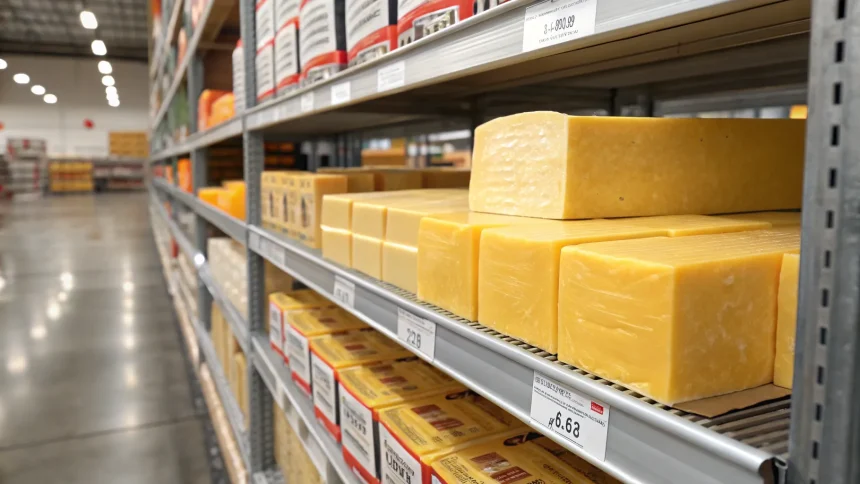
Costco’s price on Tillamook cheese blocks is giving frugal families a clear target for pantry planning. At 28 cents per ounce, the warehouse chain is undercutting rivals by as much as 34 cents per ounce, a spread that can add up fast for households watching grocery bills.
The savings are available now in stores that carry the brand, and they come as dairy prices have seesawed over the past two years. For shoppers weighing brand, quality, and quantity, the unit price makes this offer stand out in a sluggish grocery market.
How the math works for everyday carts
Costco’s Tillamook cheese blocks offer incredible savings at just 28 cents per ounce, beating competitors by up to 34 cents per ounce for smart shoppers.
Unit price tells a simple story. A 2-pound block at 28 cents per ounce costs about $8.96. A similar brand at 50 to 62 cents per ounce could run $16 to $19.84 for the same weight. That gap matters for buyers who use cheese across meals, from lunches to weekend cooking.
Even modest cheese consumption can turn the spread into real money. A family using 1.5 pounds per week would save roughly $8 to $14 each week compared with higher-shelf prices. Over a month, that can cover the cost of other staples.
Why cheese prices have swung
Dairy has faced higher feed costs, fuel, and packaging expenses since 2022, pressuring retail prices. Government data show cheese prices cooled from peaks in 2023 but remain elevated versus pre-pandemic levels. Wholesale cheddar prices also move with milk supply and export demand, which can change quickly.
Warehouse clubs can blunt those swings through bulk purchasing and lower per-unit margins. Costco has used that model for years to keep staple prices stable. When a national brand like Tillamook appears at a standout unit price, it tends to attract buyers who might usually choose store brands.
Brand value meets bulk strategy
Tillamook has built a strong following on taste and consistency. Pairing that brand strength with a warehouse-size block creates a sweet spot: recognizable quality at a discount. For Costco, it supports repeat trips and shopper loyalty on the perimeter of the store, where many food staples sit.
Grocery analysts often point to two drivers of club-store savings: scale and limited selection. Fewer SKUs move faster, trimming costs. Big packs improve manufacturing and freight efficiency. Together, they support lower unit prices without heavy promotion.
What this means for competitors
Rival supermarkets can respond with temporary price cuts or loyalty coupons, but matching a 28-cent unit price on a national cheese brand is tough. Many chains rely on smaller pack sizes that carry higher packaging and handling costs per ounce.
If club pricing holds, shoppers could shift more dairy purchases to warehouse trips. That can reduce basket sizes at traditional grocers and push them to negotiate different pack sizes or private-label alternatives to stay close on price.
How shoppers can make the most of it
Buying in bulk only saves money if food is used before it spoils. Cheese helps on this front because it freezes well and has a longer fridge life when wrapped properly.
- Check the unit price on the shelf tag and compare across sizes.
- Rewrap opened blocks tightly or use vacuum bags to prevent drying.
- Freeze portions you will not use within two weeks; thaw in the fridge.
- Shred and portion in advance for quick meals to reduce waste.
What to watch next
Milk supply, feed costs, and export demand will guide wholesale cheese prices in the coming months. If input costs ease, retail prices may drift lower. If they rise, club pricing could look even more attractive. Either way, clear unit-price gaps tend to change shopping habits when budgets are tight.
The headline here is simple and timely: a national brand cheese at 28 cents per ounce delivers meaningful savings against supermarket shelves. The catch is storage and use. For households that plan portions or share bulk buys, the math is hard to ignore.